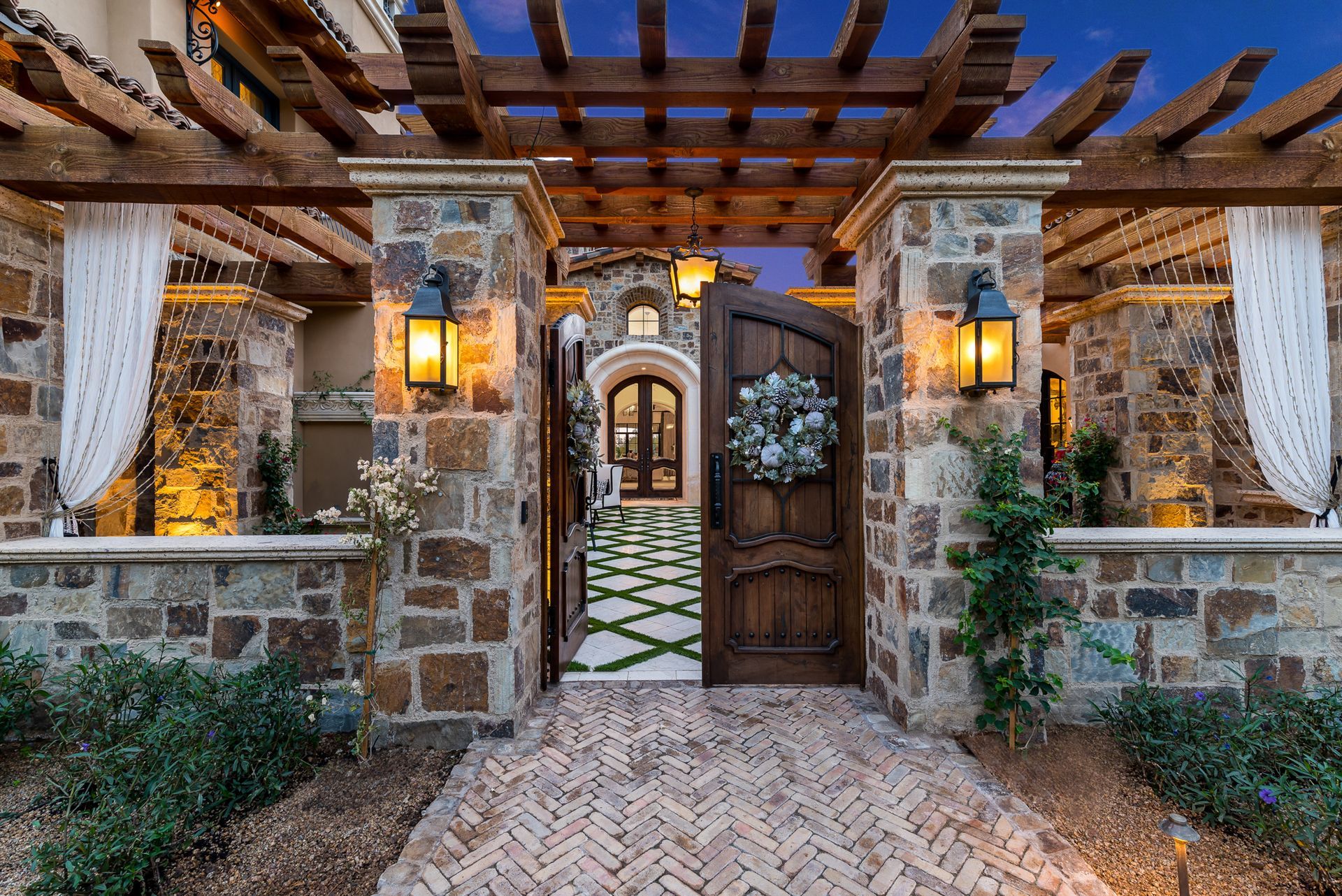


Curb Appeal at the Estate Level: Architectural Elements That Make a Statement
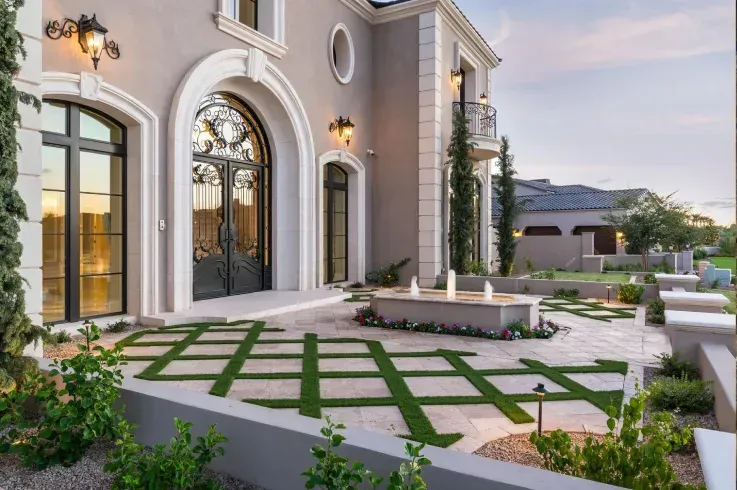
When designing a luxury custom home, curb appeal is far more than fresh landscaping or a new coat of paint. True estate level curb appeal is rooted in architecture. It is the intentional balance of scale, symmetry, materials, and structural detail that communicates prestige, permanence, and craftsmanship before anyone ever steps through the front door. For affluent homeowners building a custom residence, the exterior of the home sets expectations for everything that follows. Luxury architecture is not decorated. It is designed from the ground up to make a statement.
In high end residential architecture, curb appeal directly influences perceived property value, emotional impact, and long term desirability. The most memorable luxury homes are instantly recognizable not because of trends, but because of strong architectural fundamentals that stand the test of time.
Grand Entryways That Establish Presence
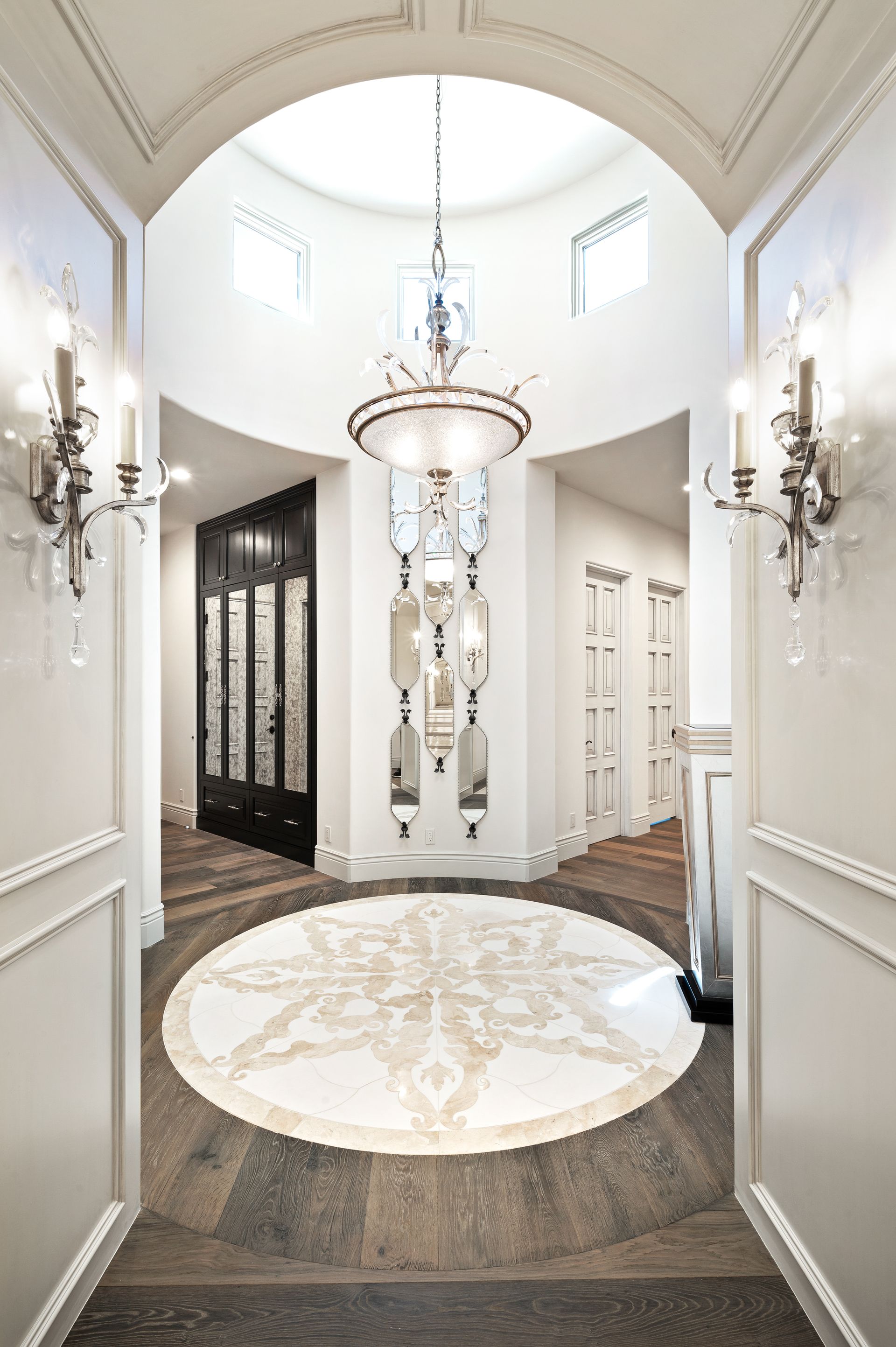
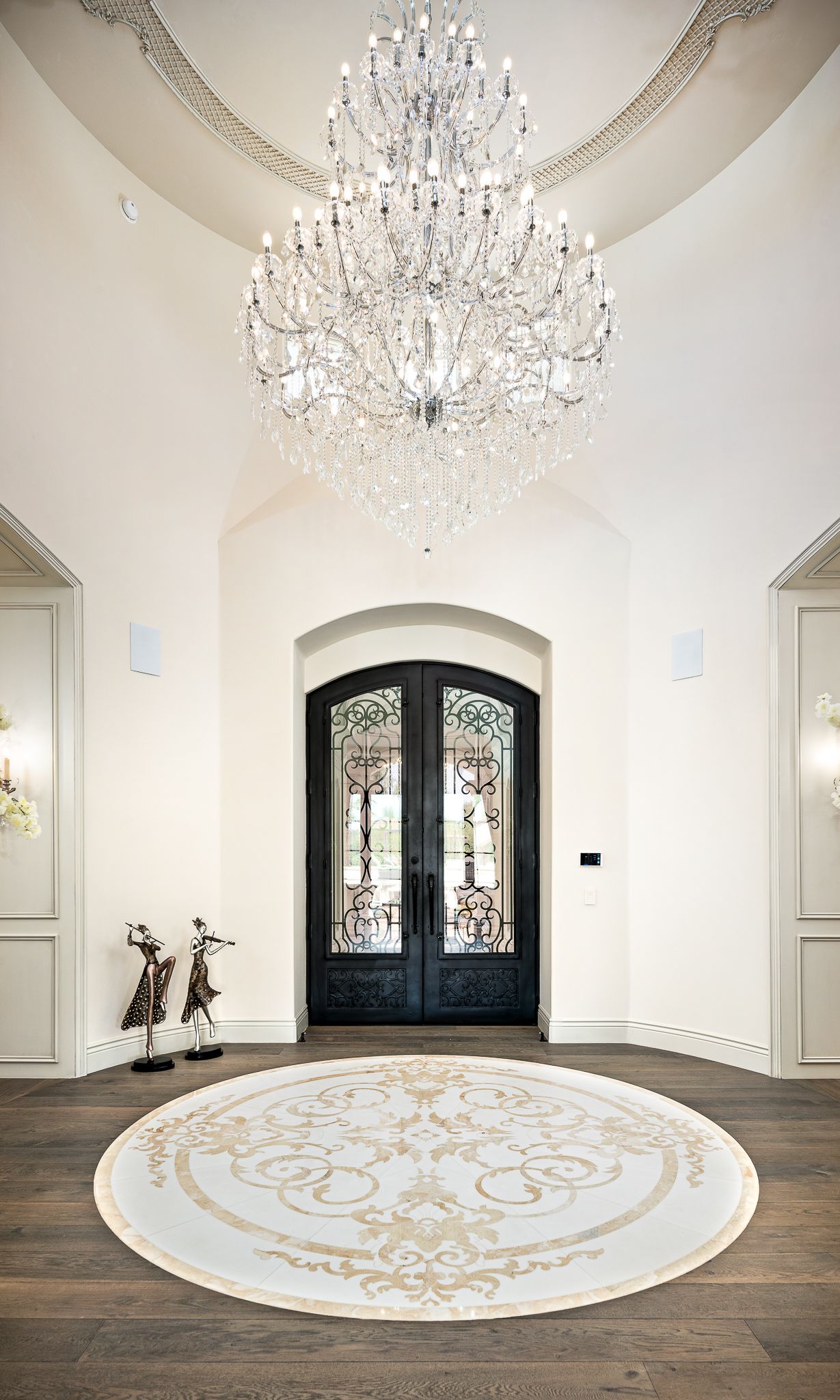
A grand entryway is often the defining feature of a luxury estate exterior design. The front door is the focal point of the façade and should feel intentional, scaled, and proportionate to the overall architecture. Oversized custom wood doors, wrought iron doors with glass panels, and modern pivot doors are all popular in luxury custom home architecture, but the true differentiator is not style alone. It is proportion and detailing.
Double door entries create symmetry and formality, while pivot doors introduce contemporary drama. Arched openings evoke Mediterranean and European estate architecture, whereas rectangular steel frame entries align with modern luxury homes. Custom hardware, architectural lighting, and ceiling height at the entry all contribute to a powerful first impression. In estate level design, the entry should never feel undersized or secondary. It should signal arrival and importance.
Rooflines and Silhouettes That Define the Home
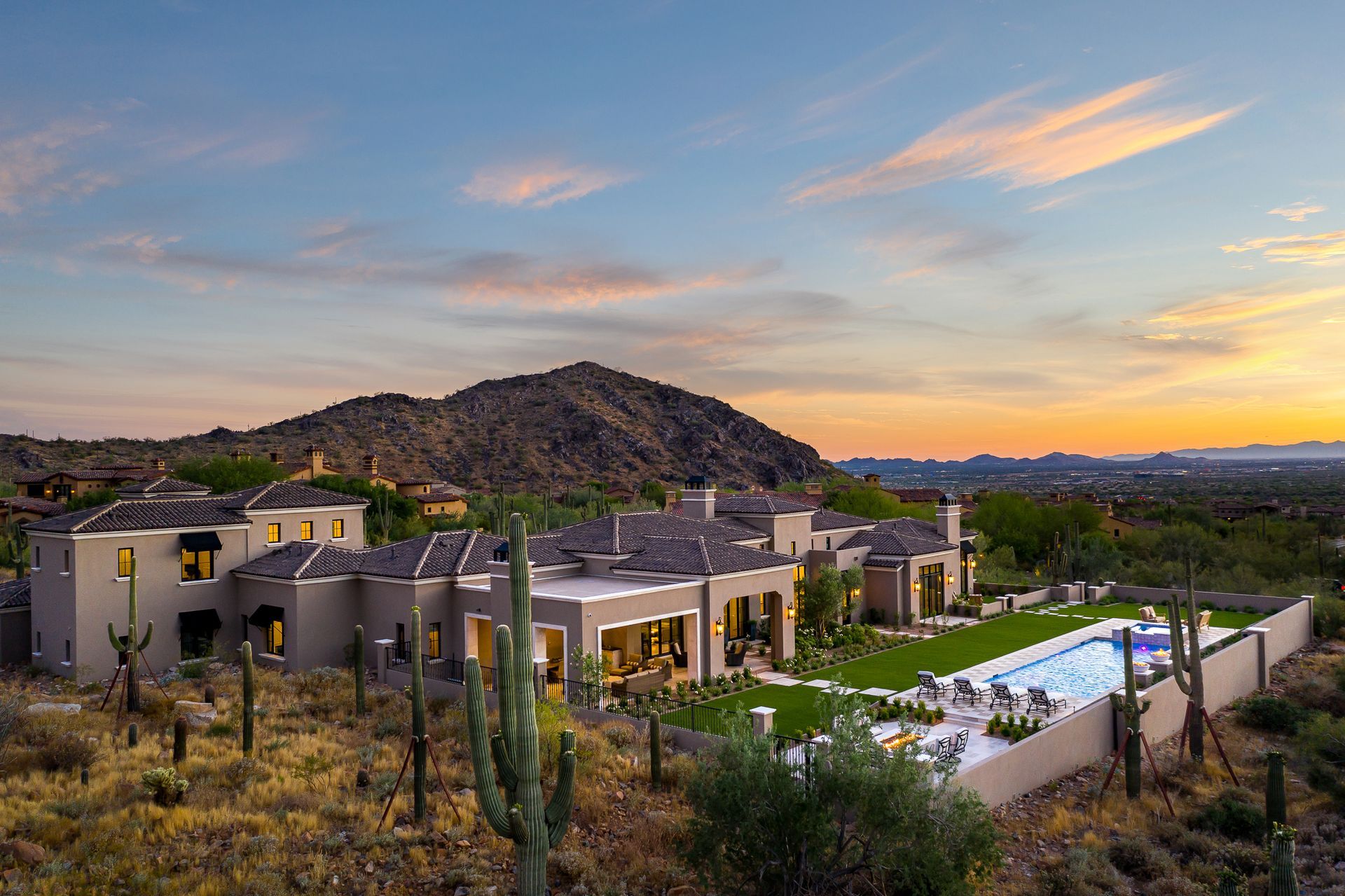
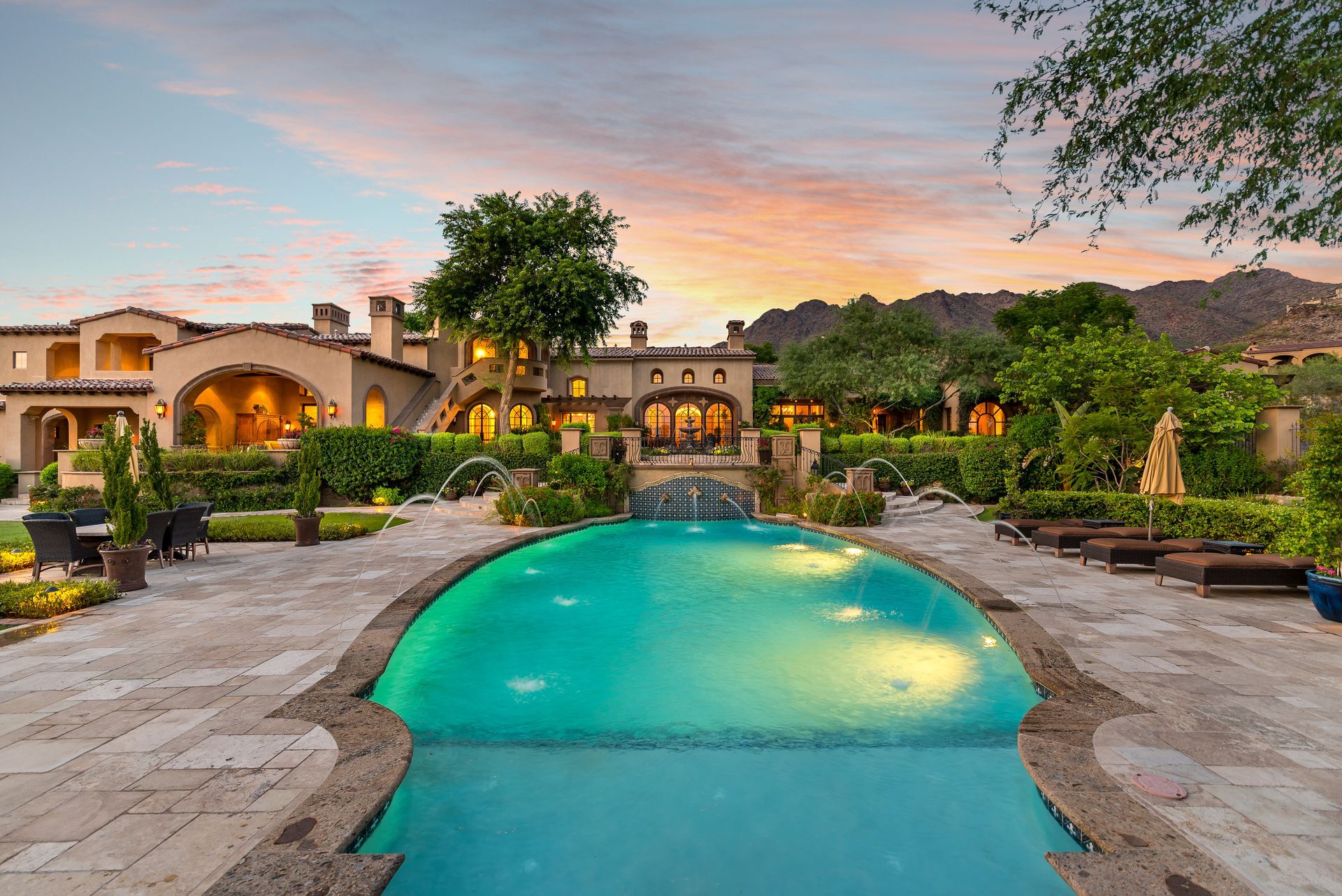
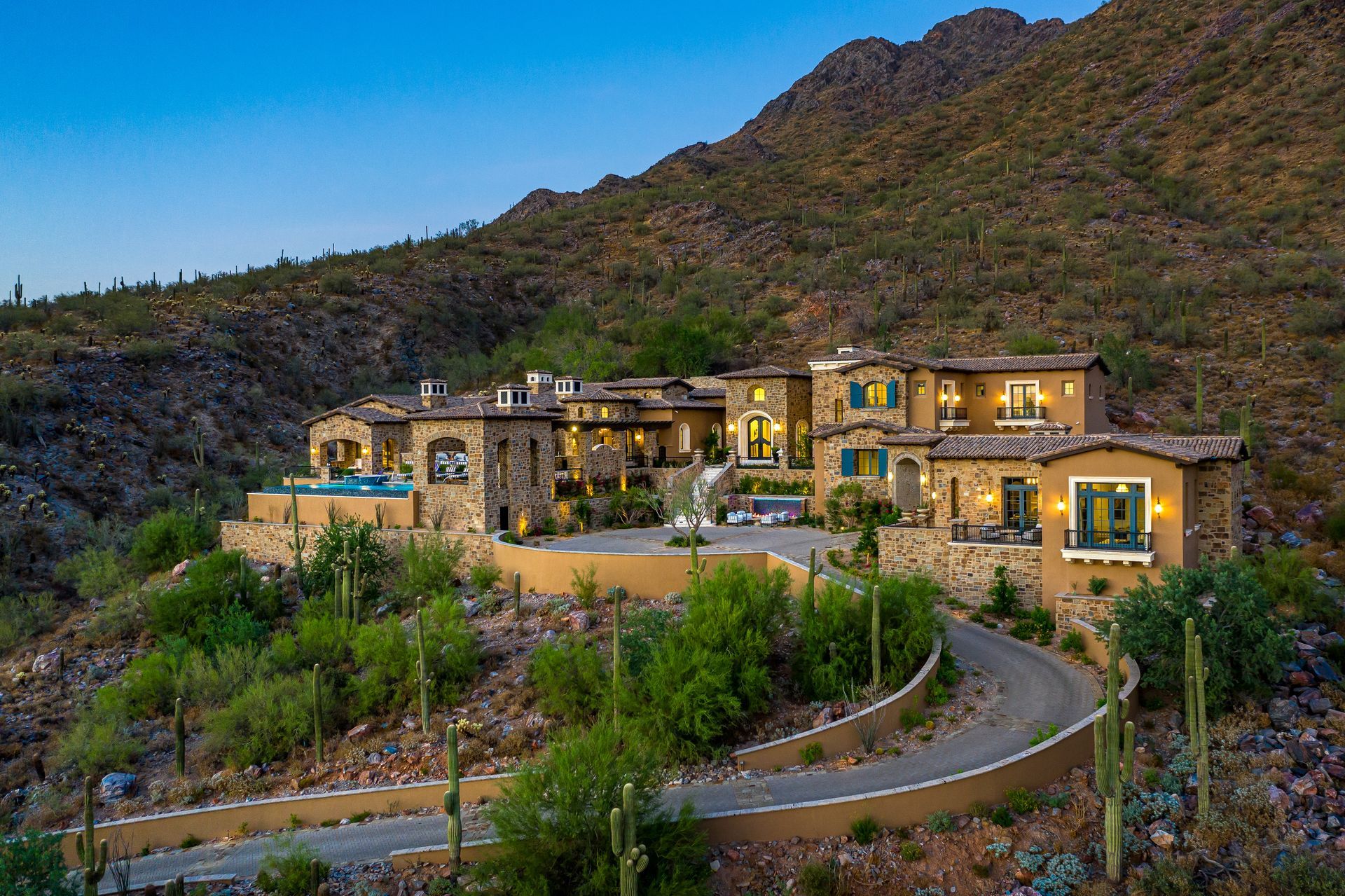
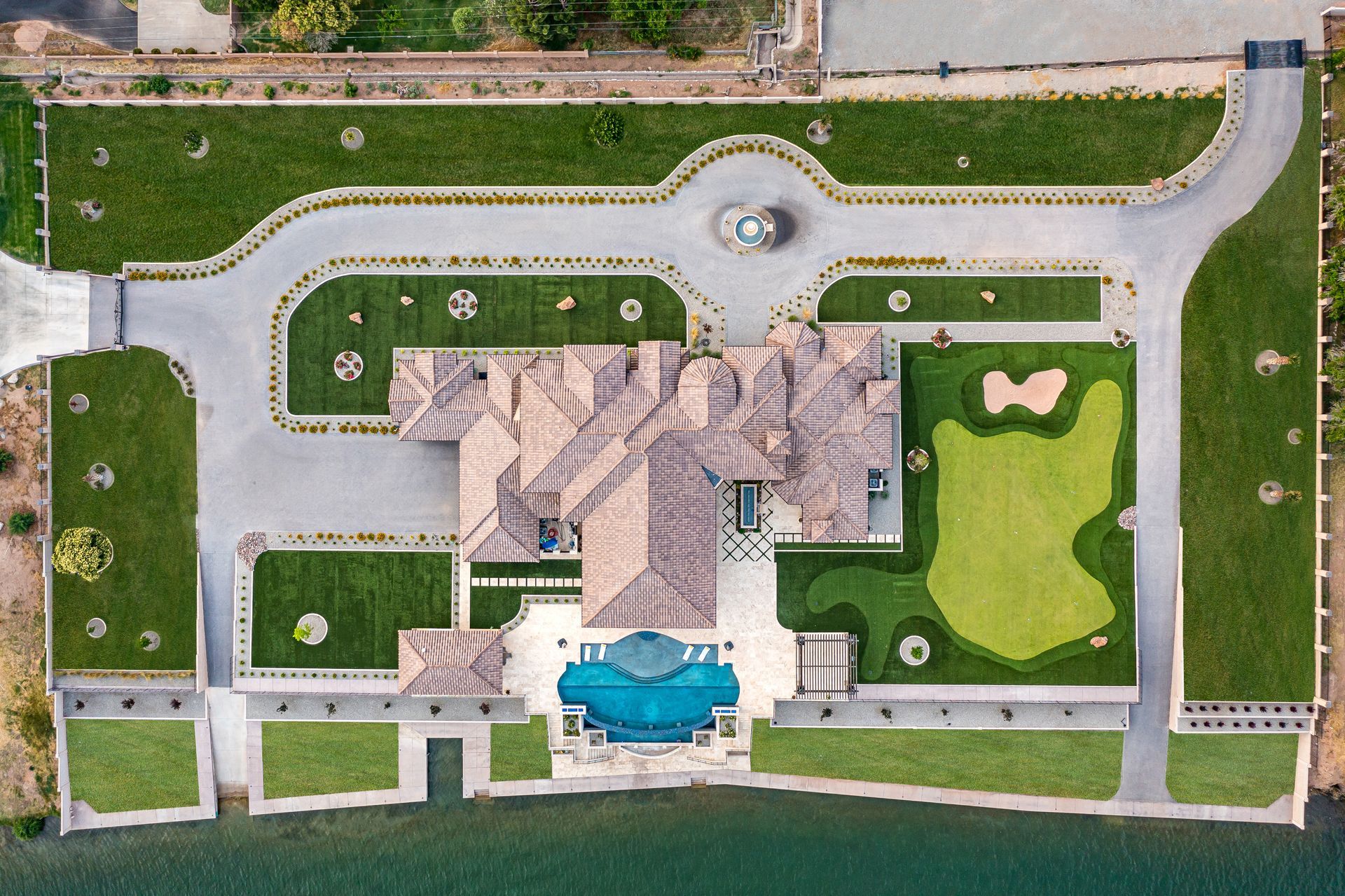
One of the most overlooked yet critical aspects of luxury residential architecture is the roofline. The silhouette of a home is often what makes it recognizable from a distance, and in estate architecture, complexity and layering create visual interest and sophistication. Multi tiered rooflines, dormers, cupolas, and prominent chimneys add character and dimension, while flat or poorly proportioned roof structures can diminish the presence of even the largest homes.
Material selection also plays a major role. Clay tile roofs complement Mediterranean and Spanish estates, slate roofing aligns with French Chateau architecture, and standing seam metal roofing suits modern luxury residences. Roof pitch, overhang depth, and symmetry influence how grand or understated a home appears. In estate design, the roof is not merely functional. It is a defining architectural element that shapes the entire visual identity of the residence.
Symmetry, Balance, and Architectural Proportion
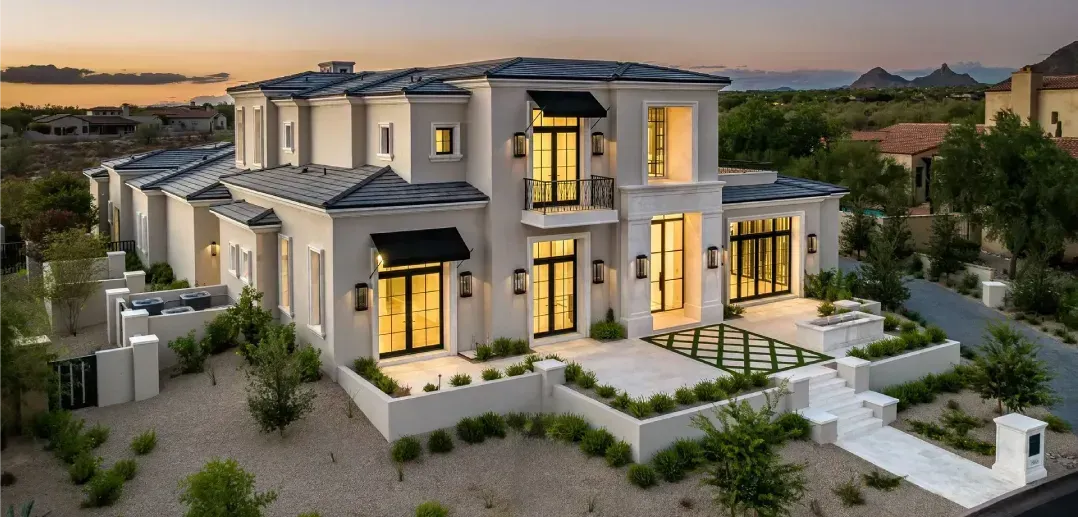
Proportion is what separates a custom luxury estate from a production home. Symmetry in high end home design creates a sense of order, elegance, and timeless appeal. Even in contemporary or asymmetrical architecture, visual balance is essential. Column spacing, window alignment, and vertical rhythm contribute to a façade that feels intentional rather than accidental.
Architectural proportion extends beyond aesthetics. It impacts how a home is emotionally perceived. Balanced façades convey stability and prestige, while poorly scaled features can make even expansive properties feel disjointed. Luxury architecture relies on precise measurements, consistent spacing, and harmonious relationships between structural elements to achieve an exterior that feels refined and enduring.
Statement Windows and Natural Light
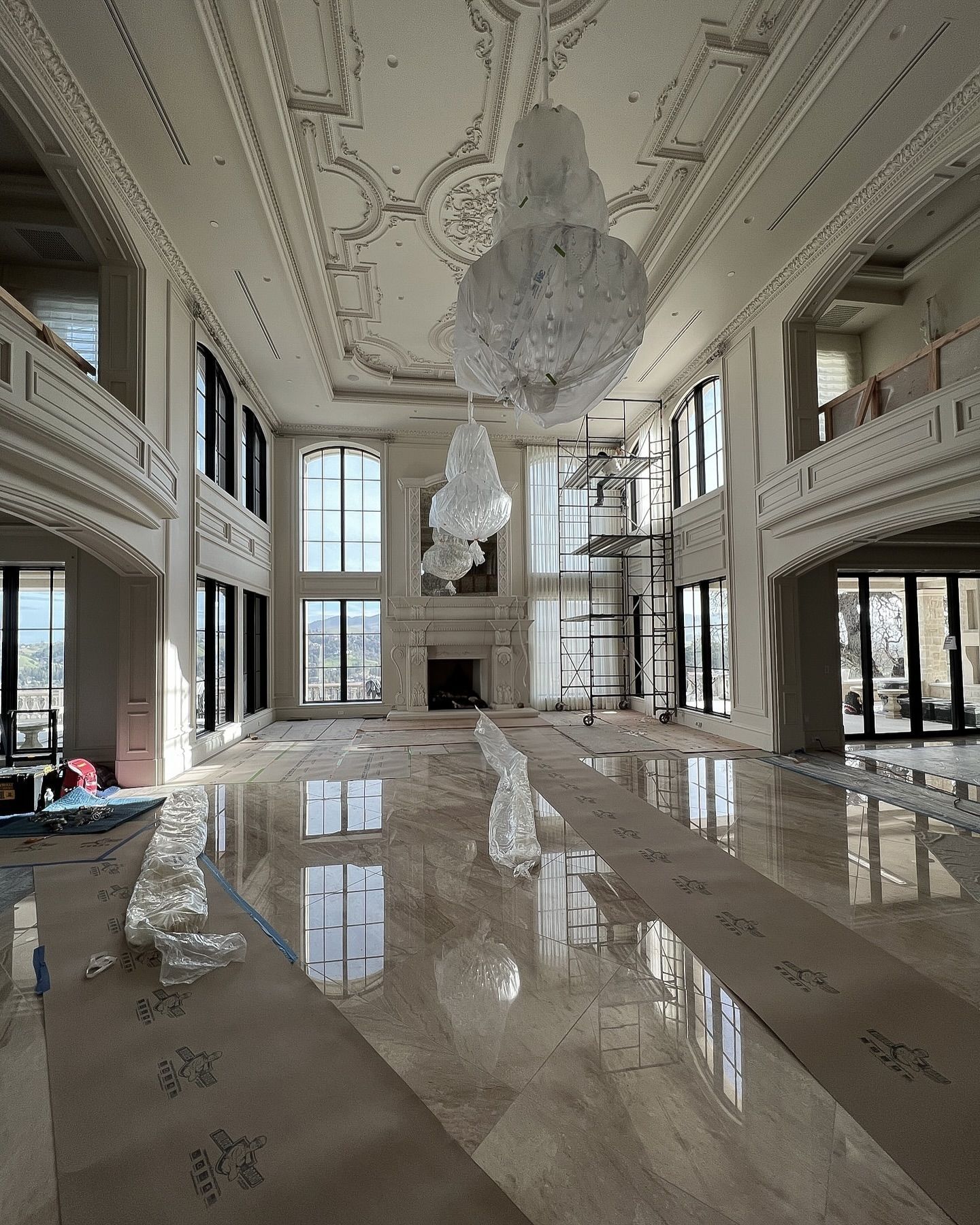
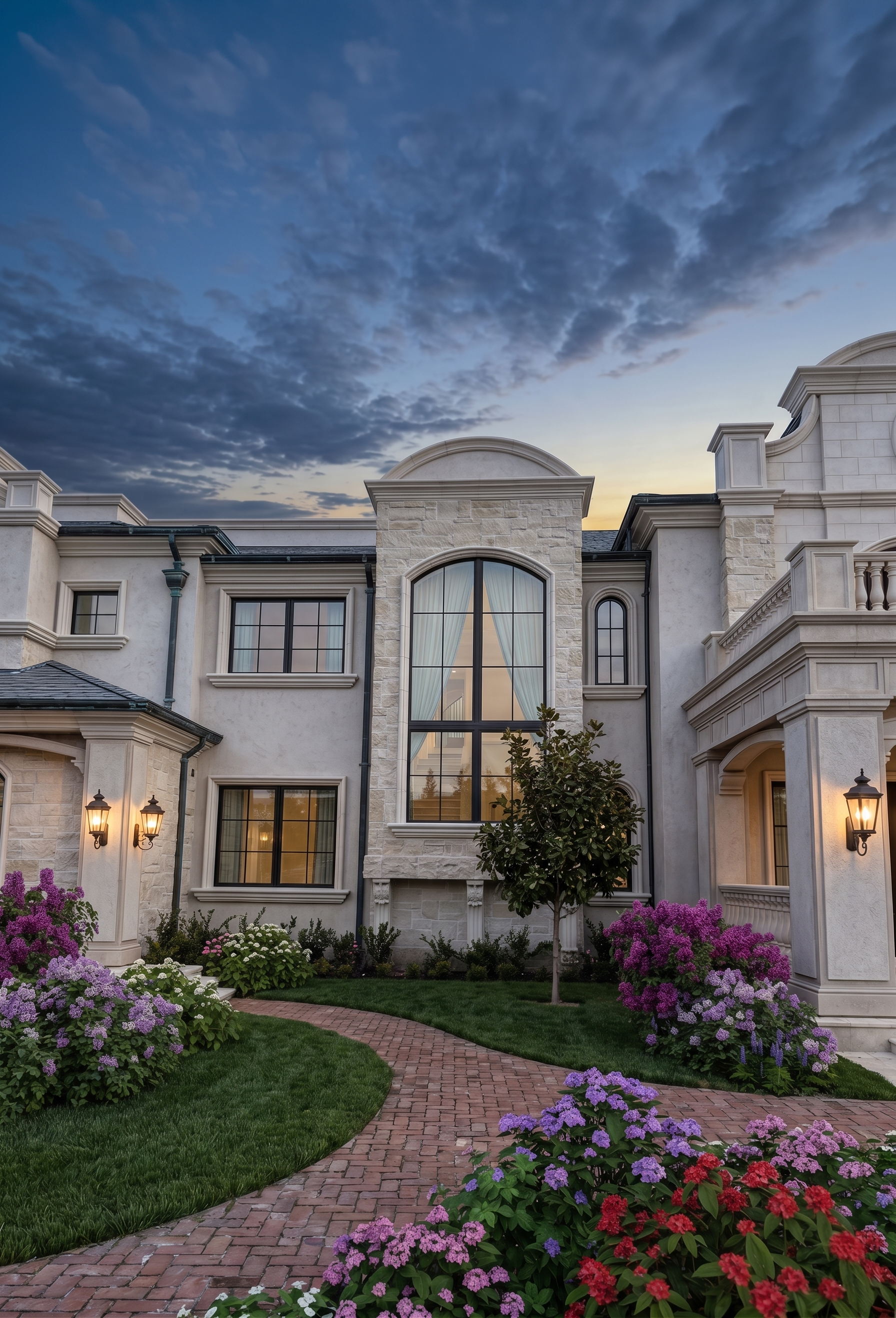
Windows are both functional and sculptural components of luxury custom home architecture. They influence natural light, interior ambiance, and exterior visual impact simultaneously. Floor to ceiling glass panels are popular in modern estate homes, while arched windows, divided light grids, and steel frame windows often define traditional or transitional luxury architecture.
Window placement and scale must align with interior ceiling heights and exterior proportions. Oversized windows can create drama, but only when thoughtfully integrated into the architectural design. In estate level homes, windows frame views, enhance symmetry, and contribute to the overall character of the façade. They are not simply openings. They are architectural statements that shape both form and function.
Exterior Materials That Communicate Permanence
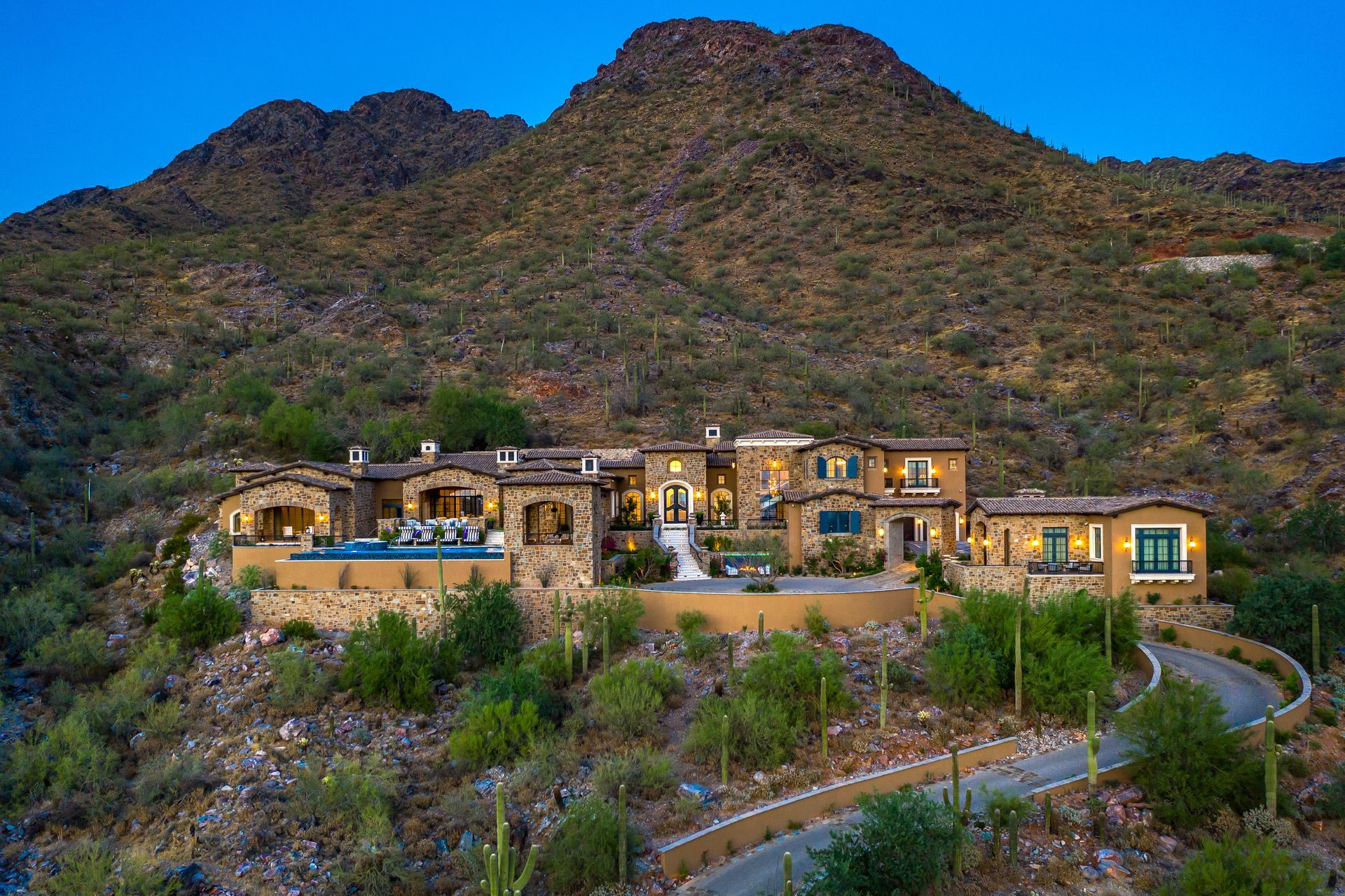
Material authenticity is one of the strongest signals of quality in luxury home exterior design. Natural stone, limestone, travertine, authentic brick, and high quality stucco finishes convey permanence and craftsmanship. Manufactured materials may offer cost savings, but they rarely achieve the same depth, texture, and long term visual value as genuine materials.
Blending materials can add richness and dimension when done intentionally. For example, combining smooth stucco with stone accents or integrating natural wood beams into a façade introduces warmth without clutter. The key is restraint and cohesion. Estate architecture benefits from layered textures and complementary palettes rather than excessive variation. Material selection should enhance architectural form, not compete with it.
Architectural Lighting That Elevates the Façade
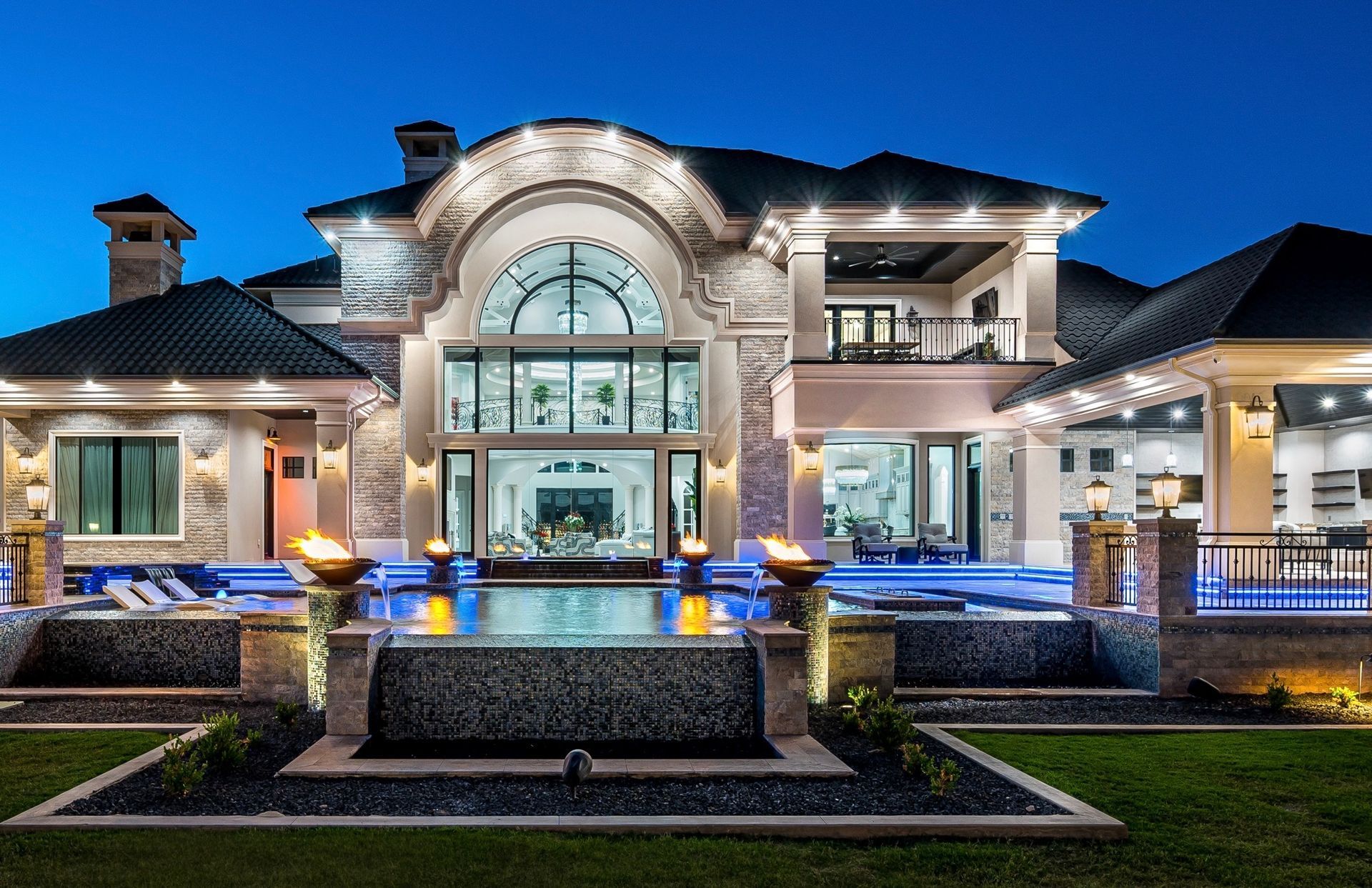
Lighting transforms luxury estate curb appeal after sunset. Strategic uplighting on columns, stone walls, and rooflines creates depth and highlights architectural features, while pathway lighting and sconces provide both safety and ambiance. Warm lighting temperatures typically complement luxury residences by adding softness and sophistication, whereas overly bright or cool lighting can appear harsh.
The goal of architectural lighting is to sculpt the home at night rather than flood it with illumination. Subtlety and precision are what elevate luxury homes. When lighting is thoughtfully integrated into the architectural design, the residence maintains its grandeur long after daylight fades.
Driveways, Gates, and the Arrival Experience
Curb appeal extends beyond the façade to the entire arrival sequence. Circular driveways, motor courts, iron gates, and privacy walls all contribute to the luxury estate entrance experience. A gradual reveal, where the home is not fully visible from the street, often increases intrigue and perceived exclusivity.
Covered arrivals such as porte cochères or grand overhangs provide both functionality and architectural presence. The driveway material itself, whether natural stone pavers, cobblestone, or custom concrete finishes, reinforces the level of craftsmanship invested in the property. In estate level architecture, the approach to the home is not an afterthought. It is part of the narrative that defines the residence.
Designing Estate Level Curb Appeal That Lasts
True curb appeal at the estate level is not achieved through trends or surface level enhancements. It is the result of comprehensive architectural planning, intentional proportion, authentic materials, and cohesive exterior design. From the roofline silhouette to the entry sequence, every element should work in harmony to communicate elegance, permanence, and distinction.
For homeowners seeking a luxury custom residence, investing in architectural excellence ensures that the home will remain visually compelling and valuable for generations. When exterior architecture is thoughtfully designed, curb appeal becomes more than appearance. It becomes identity.
Contact Us